April 27th, 2022 - History of the American Lawn
In America, over 40 million acres of land are covered by lawn, or, more specifically, turfgrass. So why do we even have lawns in the first place? This fascinating NY Times video documentary traces the history of the American Lawn.
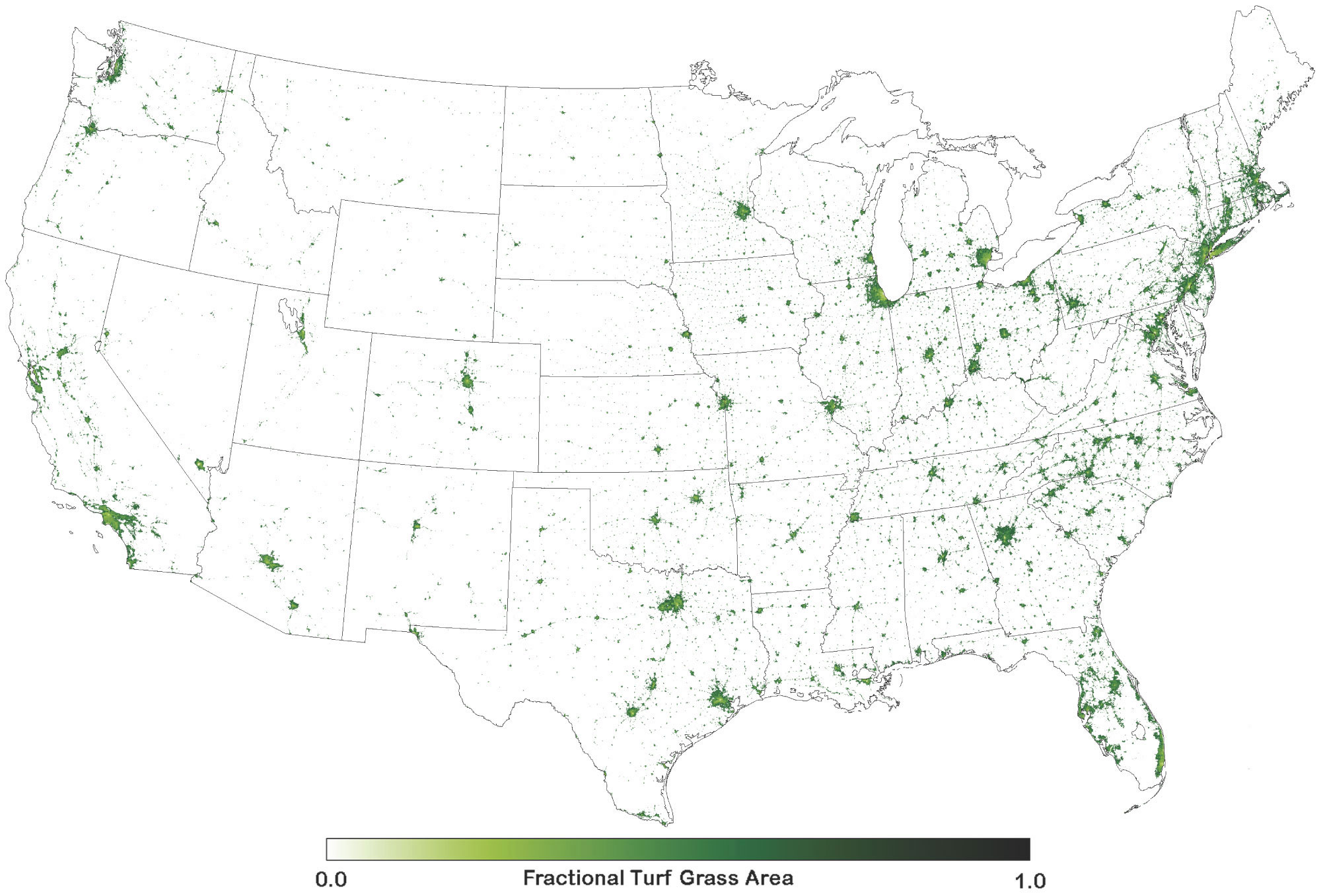
This color-coded map shows satellite-derived estimates of the fractional turf grass (lawn) area across the United States in shades of green. This was a result of a citizen science project via NASA and it is not updated anymore but you will get the picture.
Grass is a plant, and through photosynthesis, it takes up carbon dioxide out of the atmosphere. So while lawns can function as “carbon sinks,” soaking up carbon dioxide from the atmosphere, this benefit is often outweighed by the heavy carbon cost associated with the maintenance of these lawns. Rather than alleviating climate change, lawns may be contributing to it. The main culprits are lawn equipment, specifically gas-powered leaf blowers and lawnmowers, and synthetic fertilizers.
With respect to equipment, we can do the following. Many use external services for landscaping but nevertheless here are some tips.
- Shift to electric lawn equipment. Similar to electric vehicles biggest impact is possible if you can use renewable energy for charging.
- Cut down the frequency of mowing
- Upgrading gas cans can reduce spillage.
- Mow in the evening as it reduces the amount of ozone formation.
- Reduce the use of overall landscaping tools.
With respect to fertilizers and chemicals, we can do the following.
- Use of organic fertilizers. While they still release nitrous oxide, the manufacturing process does not contribute to CO2 emissions.
- Let law clippings decompose on the lawn.
- Improve the quality of the soil. Picking grass that works for our environment is the first step. Other techniques like aeration, adjusting the pH, and adding compost to the top layer also help.
- Again not mowing the lawn too often allows that grass to form a stronger root system.
- Let the weeds take over! When it gets too tall or unsightly, cut it back. Some “weeds” are lovely and support a variety of wildlife. Some homeowners are planting a mixture of fescue and clover
- Using more landscape materials, like rocks, gravel, and mulch
- Planting perennials, annuals, and groundcovers, such as mosses, ferns, and wildflowers
- Introducing more native plants to the landscape. Shrubs and trees have high carbon-capturing capabilities. Natural plants increase biodiversity and also help create a safe haven for endangered species like butterflies and honey bees.
- Leaving the lawn to its own devices will mean less irrigation.
- Creating Climate Victory gardens. Features our Gangsta gardener Ron Finley again.
Some of these practices are already practiced by many of us. The above is just an initial list and I am sure we can build our own by learning from the many gardeners in our group. I am sure we can create an immediate impact by practicing some of these techniques

https://psci.princeton.edu/tips/2020/5/11/law-maintenance-and-climate-change
ReplyDeletehttps://www.nytimes.com/video/us/100000006542254/climate-change-lawns.html
ReplyDeletehttps://extension.umd.edu/resource/lawn-alternatives
ReplyDelete